Ontario’s electricity market has undergone a major transformation over the past year, a transformation which is changing the composition of the total price of electricity on your electricity bill. This far, the changes have NOT reduced the total price you pay.
The changes will only have a positive impact on the returns enjoyed by solar energy investors. Here’s what’s going on.
Until May 2025, Ontario used the “Global Adjustment” mechanism to correct for the fact that the Hourly Ontario Electricity Price did not always compensate generators for the power they produced under fixed priced electricity contracts.
Until May 2025, the Global Adjustment acted as an administrative “top up” mechanism. Class A consumers in the Industrial Conservation Initiative program were very interested to reduce their “peak demand factor” which was calculated during five peak demand events per year. Reducing or eliminating peak demand during these five hour long windows could mean hundreds of thousands or even millions of dollars in GA savings per year.
For the time being, that is no longer the case. But it doesn’t mean Class A consumers will pay any less. It means they will pay more for kWhs than they did previously, and less for KW demand.
The Ontario government’s “Market Renewal Program” allows Ontario electricity prices to float in the market. This means that the price of the electricity commodity component on customer bills, both Class A and Class B, has spiked upwards, while the Global Adjustment component has declined. In the winter of 2026, Global Adjustment even went negative, appearing as a CREDIT on customer bills for the first time ever. This has confused many consumers.
For the first time, Global Adjustment charges were half a billion dollars HIGHER than the amount required to compensate Ontario’s electricity generators, who received more than the value of their contract rates because the market was allowed to set prices.
The Global Adjustment over-charge was then returned to Ontario consumers as a bill credit.
What does this mean for solar energy investors, both Class A and Class B?
For Class A consumers, for the time being, this means that the additional savings benefit of a solar generator due to excess reduction of peak demand factor on their bills has been somewhat reduced. In the past, if a solar generator produced 20% of the kWh required by a Class A consumer, it could potentially reduce Peak Demand Factor, and Global Adjustment charges, by 35% or more, for example. While the effect of solar generation on Peak Demand Factor remains, its economic value has decreased.
Reducing peak demand factor remains a goal for Class A consumers. The corollary is that this also reduces potential credits when GA charges exceed the price paid to Ontario’s contracted generators.
The overall effect is to bring the avoided cost per kWh of delivered solar electricity for Class A consumers more in line with the avoided cost enjoyed by Class B consumers. But here’s where it gets interesting. The costs paid by Class B consumers are going up, because the price of every kWh of electricity in Ontario is going up.
The artificially low price per kWh which Class A consumers enjoyed under the ICI program is going away. Many Class A consumers were shocked to see kWh priced at 11.69 cents on their February bills, when they are used to kWh priced at 3 or 4 cents. The new, market-driven pricing system in Ontario means that when demand for electricity rises, the Ontario electricity price per kWh will rise too.
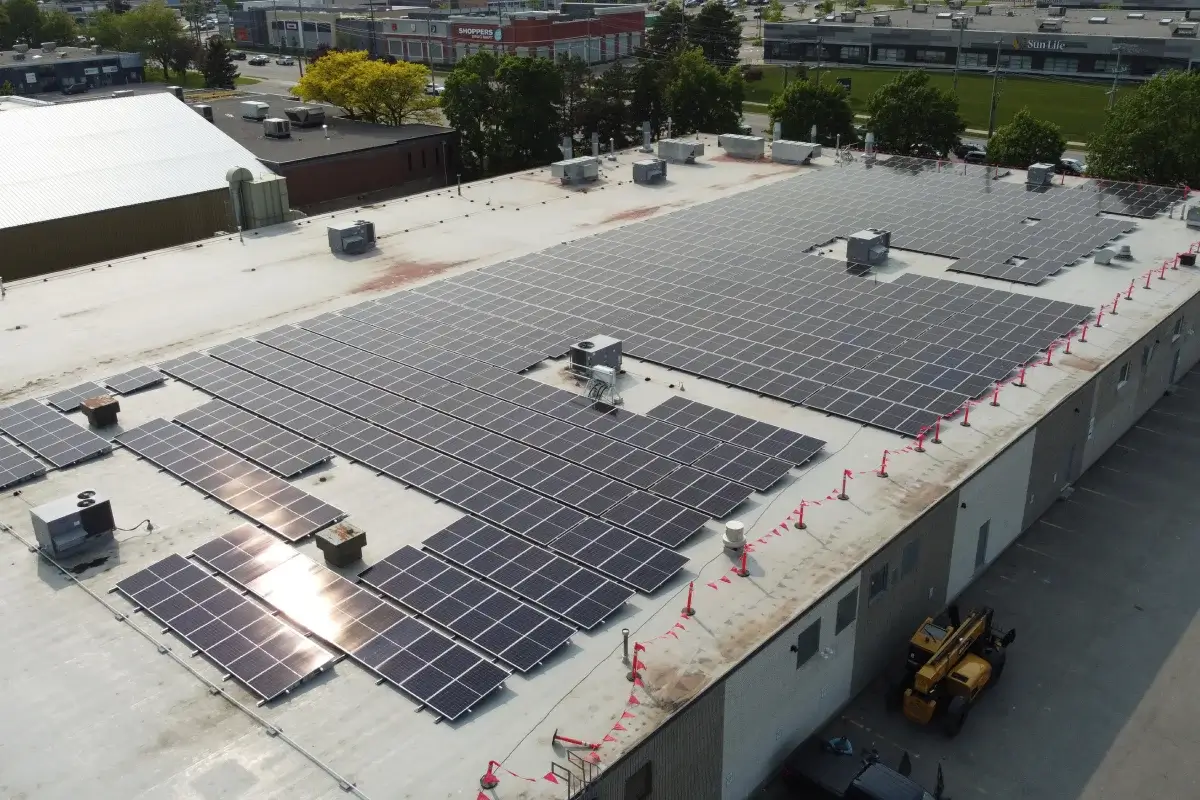
This means that the value of a commercial rooftop solar generator to Ontario’s Class A and Class B commercial and industrial electricity consumers will only increase as well.
There has never been a better time to invest in solar energy. Reach out to schedule your free site consultation today.